Customer identity · Relationship architecture · System roles · Governed activation

Design the customer relationship across systems.

A useful customer view is rarely created by placing every record in one product. Identity, commercial relationships, property operations, service activity, consent and digital behaviour may each belong in different systems.

Twin Global defines how those systems work together: what each platform owns, how lifecycle history moves, where teams act and how customer data becomes useful without losing control of its source.

Customer-service, sales and operations leaders reviewing a connected customer relationship
Identity stays coherentConnect people, households, organisations and accounts without flattening their relationships.
System roles stay clearKeep CRM, property operations and customer-data activation responsible for the work they do best.
Outcomes return to historyCarry service, sales and activation results back into the usable lifecycle record.

Customer identity and lifecycle

Model the relationship before selecting the platform.

A customer may be an individual, a household member, an authorised contact, a buyer, a tenant, a resident or a representative of an organisation. Those roles can change while the relationship continues.

The architecture must therefore connect identity, accounts, assets, products, services and meaningful events. It should show who owns the next action and preserve enough history for another team to continue the relationship without starting again.

Operational CRM, property systems and customer-data platforms then support different parts of that model. They should share context without pretending to be the same system.

Selected lifecycle stage

Identity and context come before contact details.

Capture the source, customer context, responsible team and next action without creating an isolated lead record.

  • Source and purpose retained
  • Identity checked at the right level
  • Responsibility assigned

Different platforms, clear responsibilities

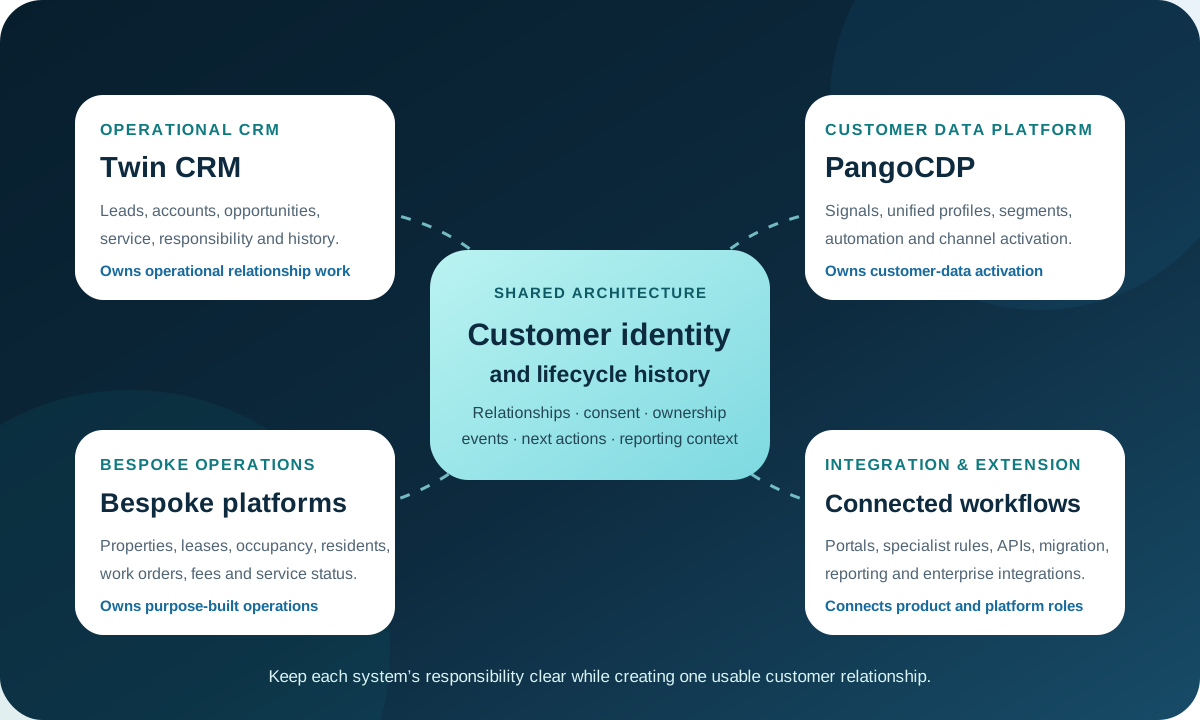
Twin CRM and PangoCDP can operate independently. Bespoke operational platforms can connect where property or service workflows extend beyond CRM. A connected programme can combine them while keeping each system’s responsibilities clear.

Operational CRM

Twin CRM

Owns customer and account relationships, leads, opportunities, service activity, responsibilities and the operational history used by sales and service teams.

Use Twin CRM alongside a property-operations or customer-data platform when those functions are required.

Explore Twin CRM
Bespoke operations

Bespoke operational platforms

Hold property, lease, occupancy, resident, work-order, fee and service-status records when the operating model requires a purpose-built system. These records can enrich the customer view while the operational platform remains the system of record.

Use a purpose-built platform when operational workflows extend beyond CRM or customer-data activation.

Platform and workflow engineering
Customer data and activation

PangoCDP

Collects approved customer signals, supports profile unification, creates segments, coordinates automation and activates audiences through connected channels.

Use PangoCDP with CRM or specialist systems when teams also need operational workflows and case ownership.

Explore PangoCDP
Architecture showing Twin CRM, PangoCDP and bespoke operational platforms connected around customer identity and lifecycle history

Configuration, integration and bespoke engineering

Use proven product capability, then engineer only what is distinctive.

A strong programme does not begin with a preference for one product. It begins with the relationship model, source ownership, required workflows and the outcomes each team must deliver.

Selected direction

Configure where the product fit is already strong.

Shape proven records, stages, permissions, workflows and automation around the parts of the lifecycle that the selected product supports well.

The relationship model fitsCore workflows are supportedConfiguration can deliver the outcome
Less unnecessary codeClearer product ownershipMaintainable change

Product details are available on the Twin CRM and PangoCDP pages. Enterprise Platform and Workflow Engineering addresses operating models that require a purpose-built platform.

Data quality, consent, activation and reporting

Govern the data before asking teams or automation to act on it.

Duplicate identities, incomplete relationships and inconsistent definitions are not solved by a larger database. Matching rules, quality checks, exception queues and clear stewardship should address problems close to the point where information is created.

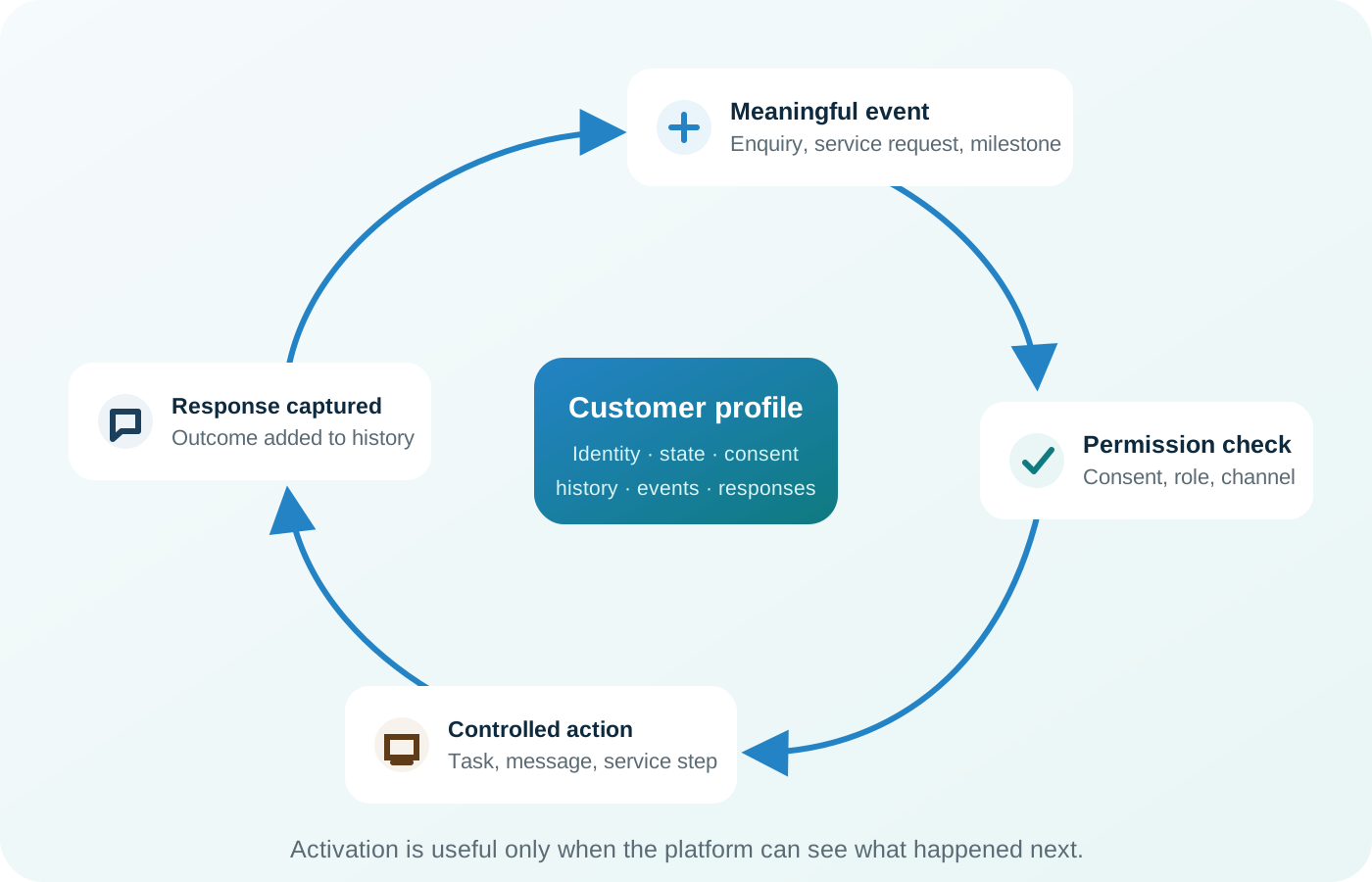
Consent and communication preferences must also travel with the customer context. Activation should use approved purposes and channels, and its outcome should return to the lifecycle history so sales, service and reporting teams can see what happened.

Reporting then uses consistent definitions across customer, account, property, service and activation activity. It should explain progression, demand, exceptions and ownership rather than create another disconnected set of numbers.

Loop showing customer events passing through identity, consent and activation before the outcome returns to customer history

Identity and data quality

Match carefully, preserve provenance and route uncertain records to a responsible reviewer.

Consent and preferences

Make purpose, channel and communication choices available wherever customer data is used.

Activation and write-back

Send approved audiences or next actions to connected channels and record the resulting event.

Lifecycle reporting

Measure progression, service demand, exceptions and outcomes using shared definitions and clear ownership.

Combined programmes

Connect products around the operating outcome, not around a larger technology stack.

A combined programme is appropriate when customer, operational and activation responsibilities cross product boundaries. The architecture should state what each component contributes and where bespoke engineering closes the remaining gaps.

Property and real estate

Sales, leasing, occupancy and customer engagement

Twin CRM can hold the commercial relationship. A bespoke property-operations platform can remain the source for property, lease, resident and service records. PangoCDP can use approved signals for segmentation and activation.

Twin CRM+bespoke property platform+PangoCDP+integrations
Property and Real Estate
Retail and consumer products

Operational service with coordinated customer activation

Twin CRM can organise sales, service or field responsibility, while PangoCDP unifies relevant customer signals and activates approved audiences across connected channels.

Twin CRM+PangoCDP+service integrations
Retail and Consumer Products
Automotive and dealer networks

Customer and vehicle history across central and dealer teams

Twin CRM can support the operational customer lifecycle, connected dealer and service systems can retain their responsibilities, and PangoCDP can support nurturing, reminders and activation.

Twin CRM+PangoCDP+DMS and service systems
Automotive and Dealer Networks
Complex enterprise workflows

Products where they fit, bespoke engineering where they do not

Custom portals, specialist decisions, data migration, APIs, reporting and operational workflows can connect the selected products to the wider enterprise environment.

Product foundations+bespoke workflow+enterprise integration
Platform and workflow engineering

Relationship and system map

Define what each platform should own before choosing the implementation.

Bring a high-level view of your customer lifecycle, operational systems and current data problems. We can use it to identify the right product, integration and engineering route.