Prepare
Collect the required information and expose gaps before review.

Digital health engineering · Controlled workflows · External systems
Health and pharmacy workflows depend on clear authority. Each action needs a permitted user, a visible state and a defined response when information is incomplete or an external service rejects, delays or cannot process the next step.
Twin Global turns confirmed operational and regulatory requirements into product behaviour that can be reviewed, tested, released and changed without losing control.

Responsibility before interface
Health-related work can pass through preparation, review, authorised decision, external exchange and follow-up. The product must show who owns the current step, what that person is allowed to do and what must happen before the workflow can move forward.
Collect the required information and expose gaps before review.
Show source context, prior changes and reasons for correction.
Reserve the final action for the permitted role and record the decision.
Make external service responses, delays and recovery actions visible to the right team.
The client and its advisers confirm the applicable legal, clinical, privacy and regulatory obligations; Twin Global translates them into product rules, access controls, acceptance criteria and test scenarios.
Interactive role explorer
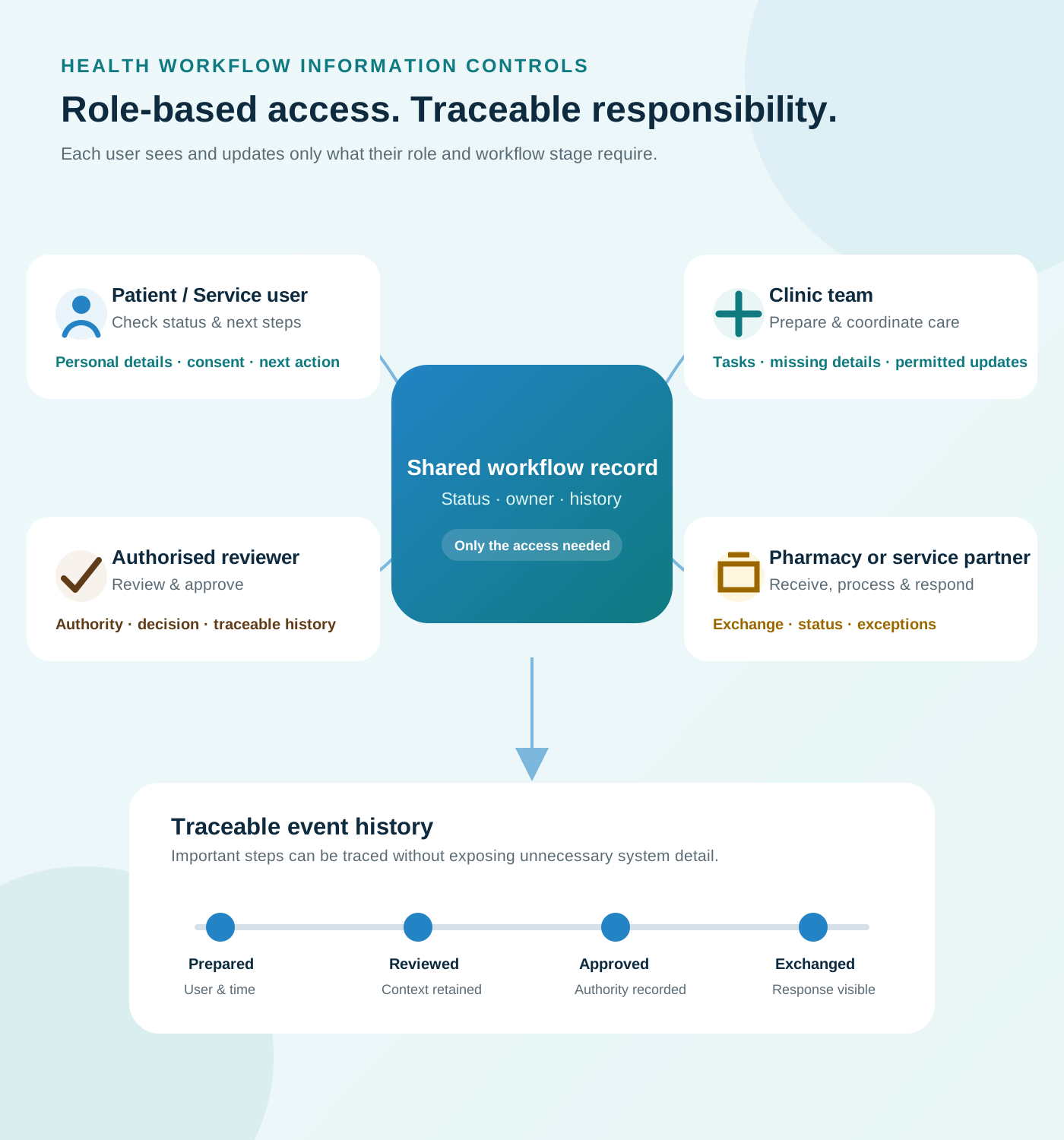
The same record should not create the same experience for every user. Tasks, states, permissions and next actions must reflect each user’s responsibility.
The preparer sees the current task, available information and unresolved gaps without being mistaken for the final decision-maker.
The reviewer sees source information, earlier changes and unresolved issues, then returns the item or advances it with a clear reason.
Only the authorised user can approve the final step. The platform records the decision, state change and traceable history linked to the action.
The support role sees the failed step, provider response and recovery history without receiving broader access than the task requires.
External-service integration and exceptions
A dependable health platform does not treat the successful path as the whole product. It must prevent avoidable errors, translate external responses into clear workflow states and guide authorised users through correction, re-review or escalation.
Required information, role authority and workflow context should be checked before review, approval or external submission. A clear validation state reduces avoidable rejection and keeps the user focused on what must be corrected.
The platform should keep the external response linked to the originating task, explain the operational effect and identify who is responsible for the next action. A failed exchange must never look complete.
Recovery should preserve earlier requests, responses, corrections and decisions. Where the change affects an authorised action, the workflow should return through the required review or approval step before another exchange is attempted.
Controlled information
A useful event history should explain who acted, what changed, when it changed and why the workflow moved.
The product should retain who acted, when the action occurred, what changed, which state followed and what an external service returned. That history helps authorised teams investigate a rejected item, understand an amendment and verify which decision or version moved forward.

Quality and release preparation
Release readiness begins with confirmed requirements, acceptance criteria and representative journeys—not a final round of screen checks.
Testing should cover role boundaries, permitted state transitions, information changes, external services, negative scenarios and recovery paths. Environment configuration, deployment preparation and post-release checks make the release easier to verify and support.
Controlled change after release
Each material change should be assessed against roles, states, integrations, stored records and earlier behaviour. Versioned requirements, regression testing, release approval and a practical recovery plan help teams introduce change deliberately.
Australian digital-health delivery in practice
See the customer story for the full project scope, conformance milestones and current production status.
Twin Global Solutions developed ScriptStream as a specialist-prescribing platform with preparation, review, authorised approval, external exchange and exception handling. The programme involved Healthcare Identifiers, eRx, Australian Digital Health Agency electronic prescribing, PBS authority-related workflows and PRODA-related access arrangements.
View the ScriptStream storyPlan the engineering brief
Discuss the workflow, external services and release requirements for your health platform.