Business event
What must the operation complete?
Define the trigger, outcome and acceptable delay.
APIs · Legacy systems · Identity · Migration · Reliability · Cloud operations
An integration is not complete when one API call succeeds. The operation must still know who owns each record, how identities are matched and who restores work after rejection or disagreement.
Twin Global designs APIs, migration, deployment and monitoring around those operating responsibilities, so teams can change and support the connected environment with confidence.

Integration begins with responsibility
Define the business event, system of record, identifiers, visible state and recovery owner first.
Business event
Define the trigger, outcome and acceptable delay.
System of record
Name who may create, update and correct the record.
Identity
Control identifiers, duplicates and access.
Visible state
Show waiting, completed, rejected and corrected states.
Recovery owner
Assign alerts, retries, reconciliation and correction.
The simplest pattern that fits the dependency
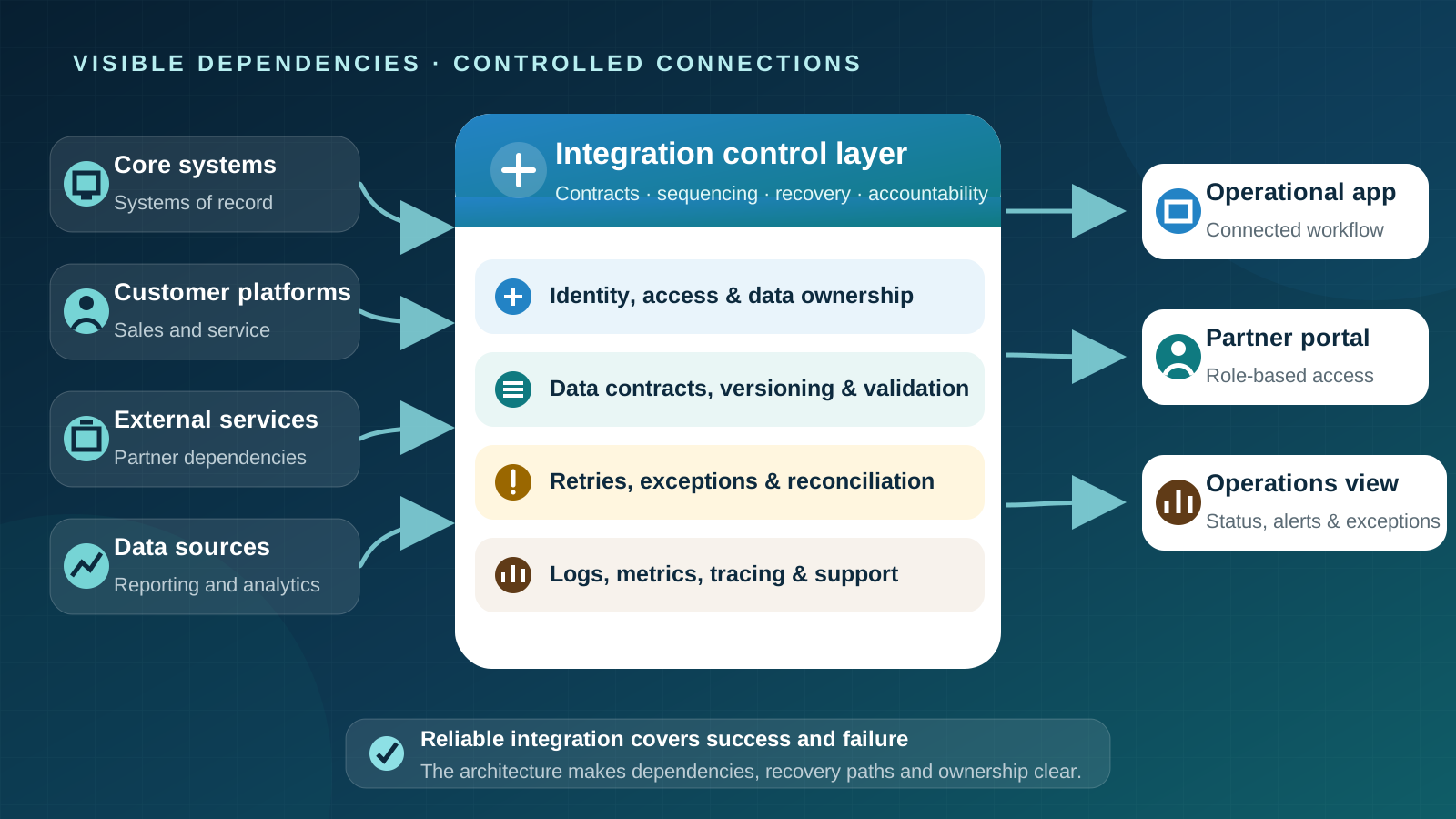
The appropriate pattern depends on timing, volume, provider constraints and failure tolerance. Identity, validation, access, error handling and change ownership must be explicit.
Use when the next step genuinely depends on an immediate result
Define authentication, required data, validation, version behaviour, time-outs and provider failure responses.
Use when systems need independence and resilience
Design for ordering, duplicates, backlog visibility, failed messages and final-state reconciliation.
Use when the surrounding environment requires it
Define the schema, cut-off time, transfer, acknowledgement, late-file ownership and reconciliation.
Use when immediate replacement would create unnecessary risk
Stabilise the interface while selected workflows and data move into a maintainable platform.
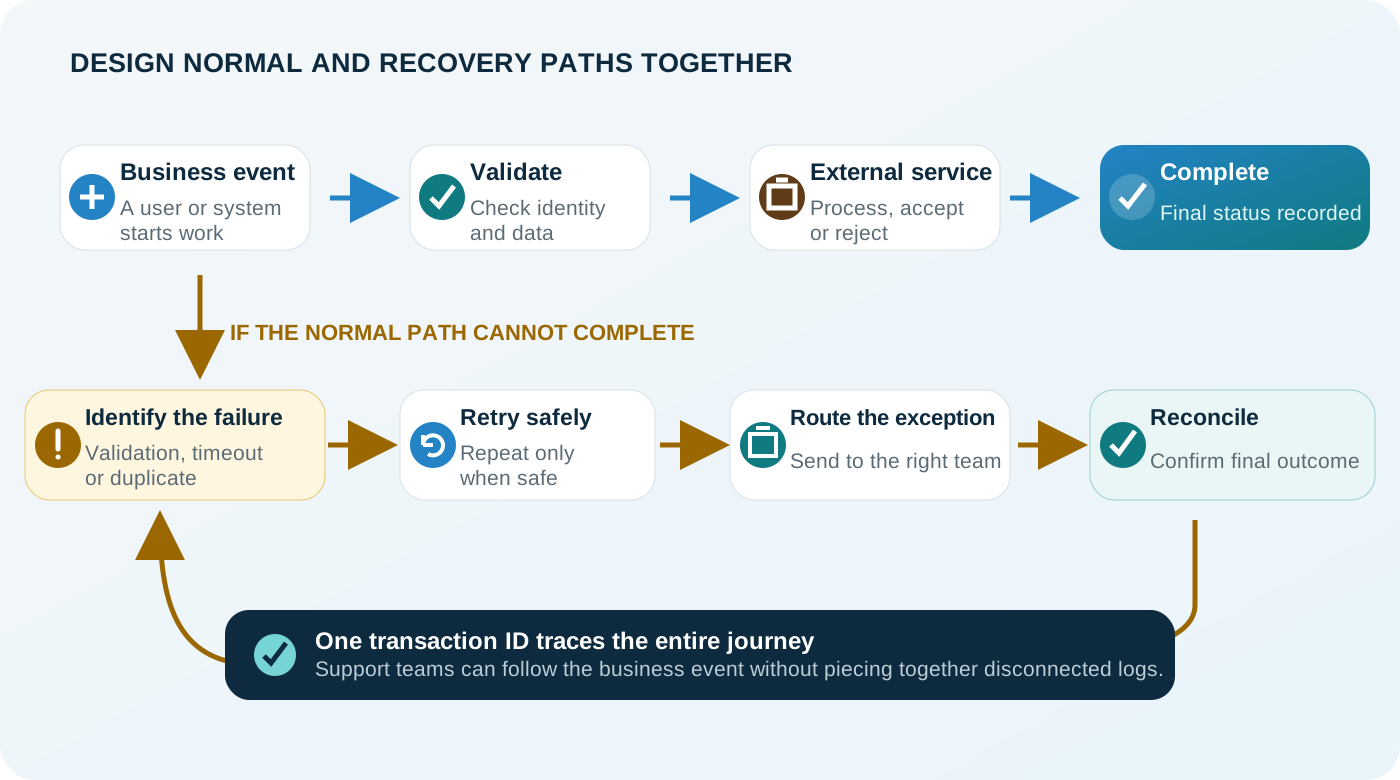
Design the normal path and failure path together
Rejections, outages, duplicates and partial completion need visible status and a controlled route to retry, correct, reconcile or escalate.
Confirm the business outcome, not only the technical response
A shared transaction identifier links the request, response, workflow status and user outcome.
Correct before retrying
Show the reason, prevent duplicates, route correction to an authorised person and confirm the final state.
Queue safely and stop when human judgement is needed
Retry only when a request is safe to repeat. Set limits, prevent duplicates, monitor the queue and reconcile incomplete transactions.
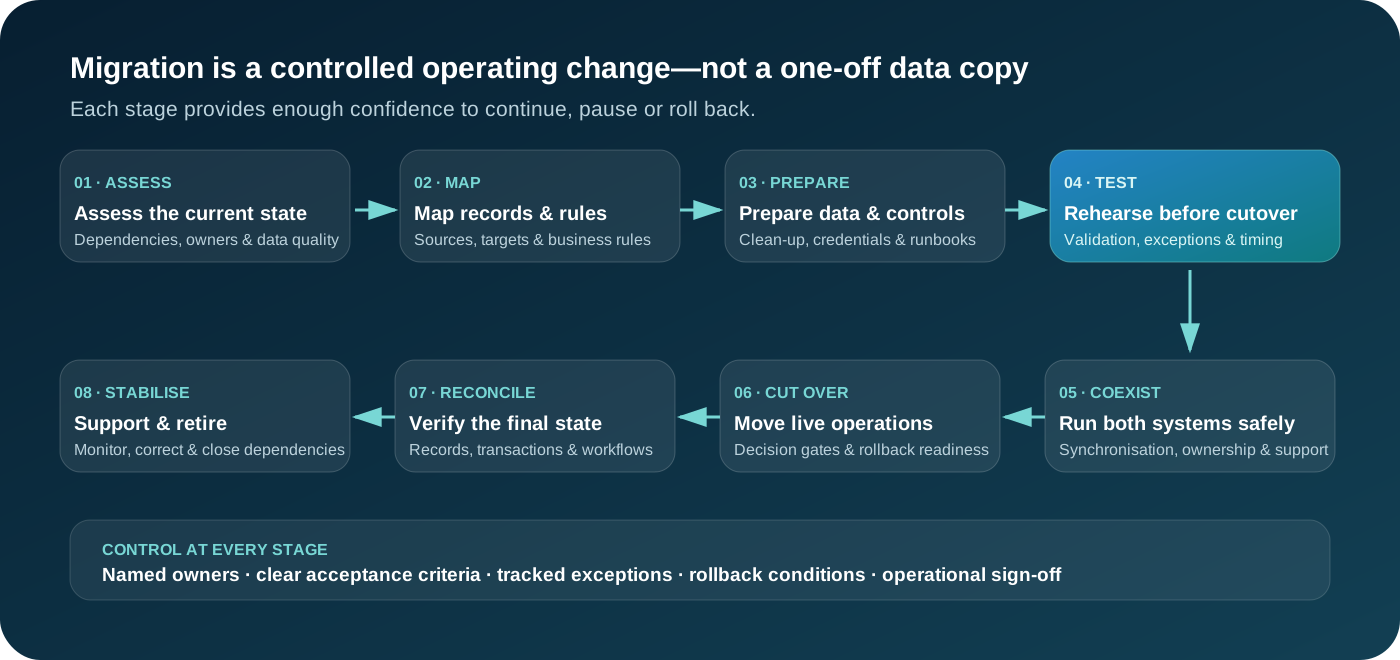
Modernise without treating migration as a data copy
Migration covers mapping, cleansing, configuration, acceptance, cutover and verification. Phased operation may be safer than one replacement event.
Stage 01
Map owners, workarounds, integrations and source-data quality.
Stage 02
Document fields, identifiers, transformation rules and ownership.
Stage 03
Clean records, configure access and agree operational controls.
Stage 04
Use representative volumes and exercise exceptions, not only successful records.
Stage 05
Synchronise only where necessary and make temporary rules explicit.
Stage 06
Apply decision gates before the live operation changes.
Stage 07
Resolve differences and verify the final business state.
Stage 08
Track incidents, corrections and support ownership through stabilisation.
Deployment, monitoring and operational visibility
Separate environments reduce accidental change. Controlled releases coordinate versions, interface contracts, provider windows and rollback.
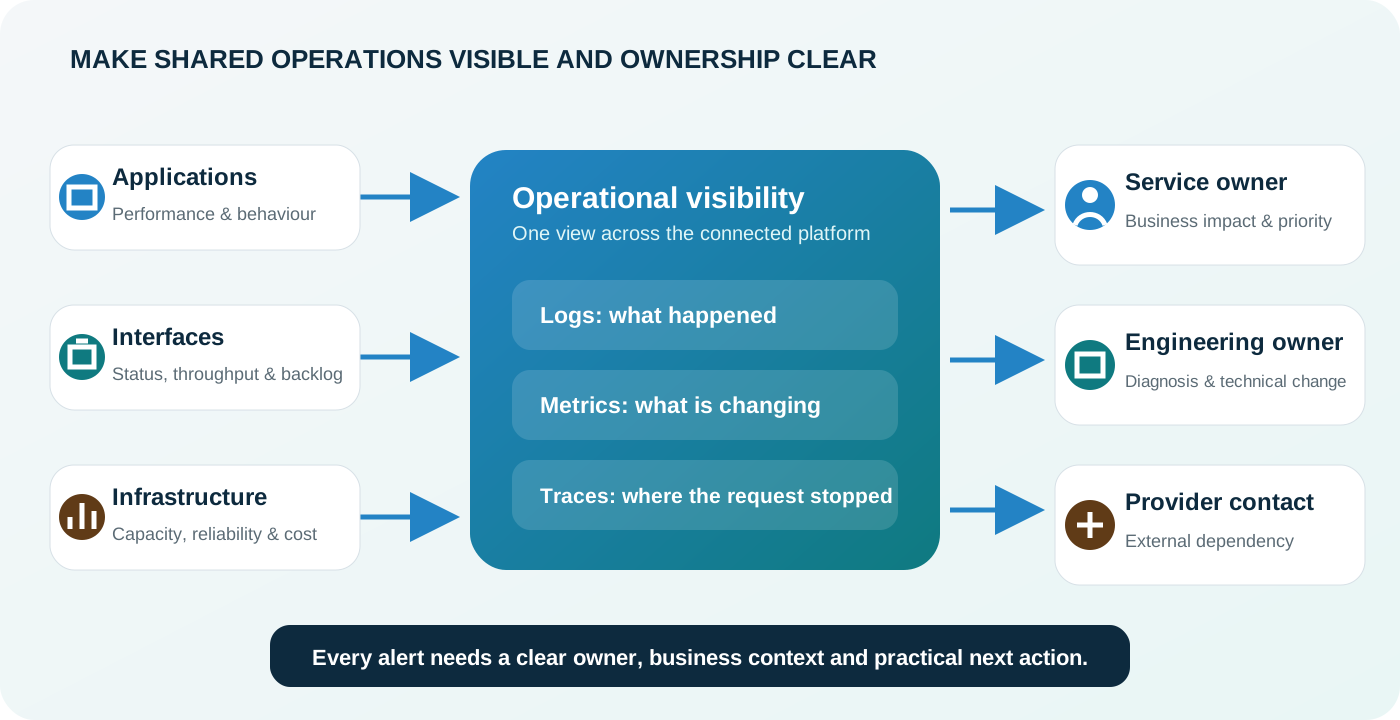
Operational monitoring should show system health, transaction status, rejection reasons, queues and delays. Alerts need a named owner and enough context to act. Cloud choice alone does not guarantee security, resilience or compliance.
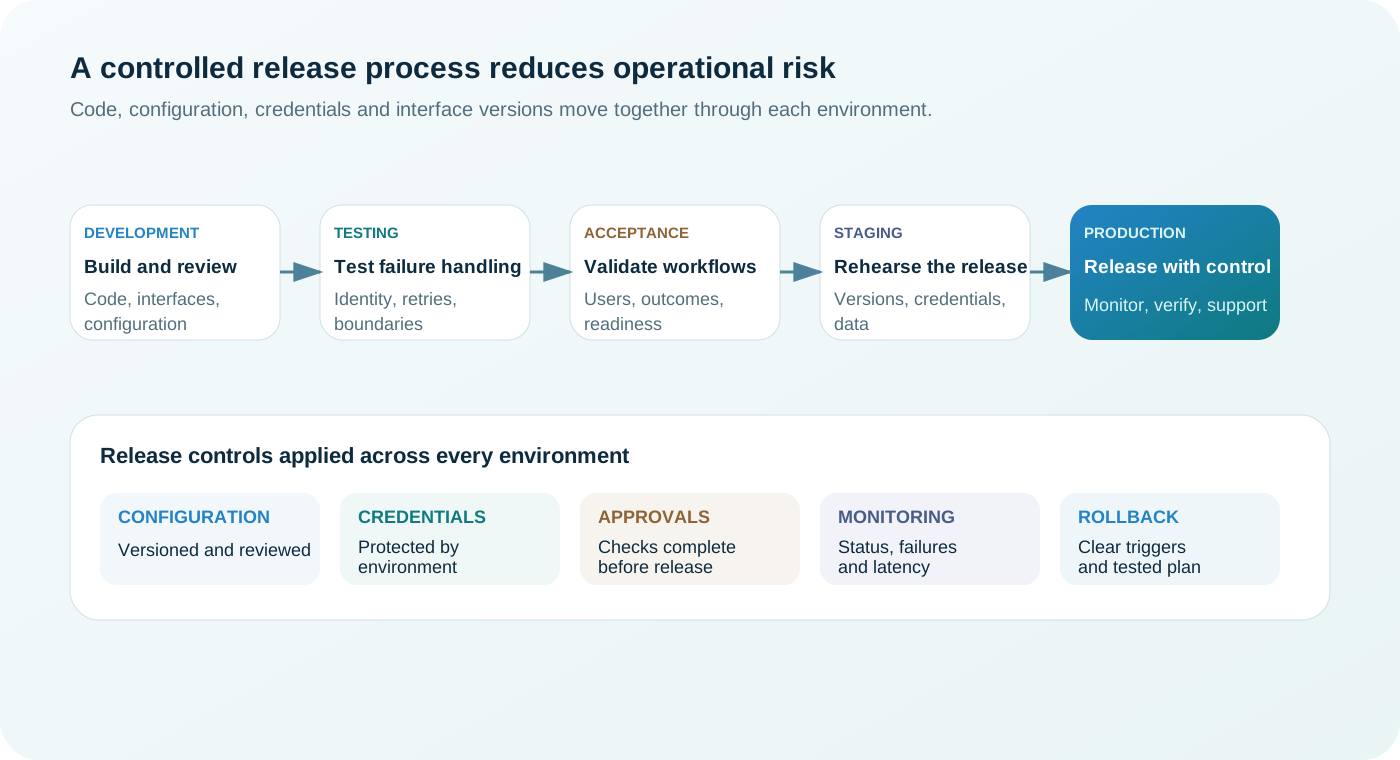
Verify authentication, formats, validation, version behaviour and identity matching.
Exercise ordering, duplicates, retries, queue growth, downstream delay and reconciliation.
Coordinate versions, credentials, provider windows, owners and rollback conditions in one plan.
Relevant product integration patterns
Twin CRM, PangoCDP and bespoke operational platforms may operate independently or together. Record ownership, consent and failure paths must remain clear.
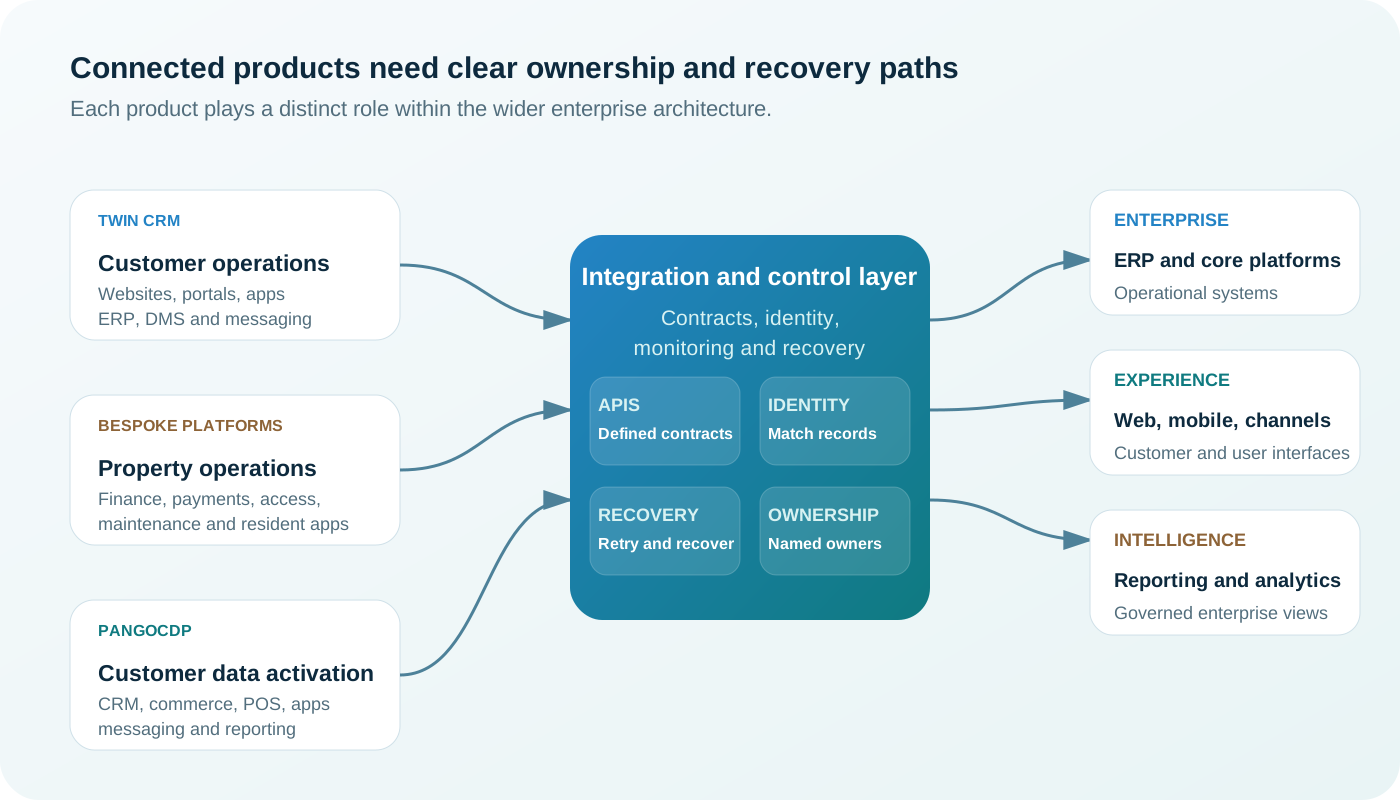
Connect websites, portals, mobile applications, ERP, dealer systems, messaging, PangoCDP and reporting while preserving ownership of customer and service records.
Explore Twin CRMConnect finance, payments, access, maintenance, resident applications, leasing workflows and reporting around clearly defined property-operation responsibilities.
Platform and workflow engineeringConnect CRM, commerce, point-of-sale, applications, messaging and reporting with explicit identity, consent, data-quality and failure handling.
Explore PangoCDP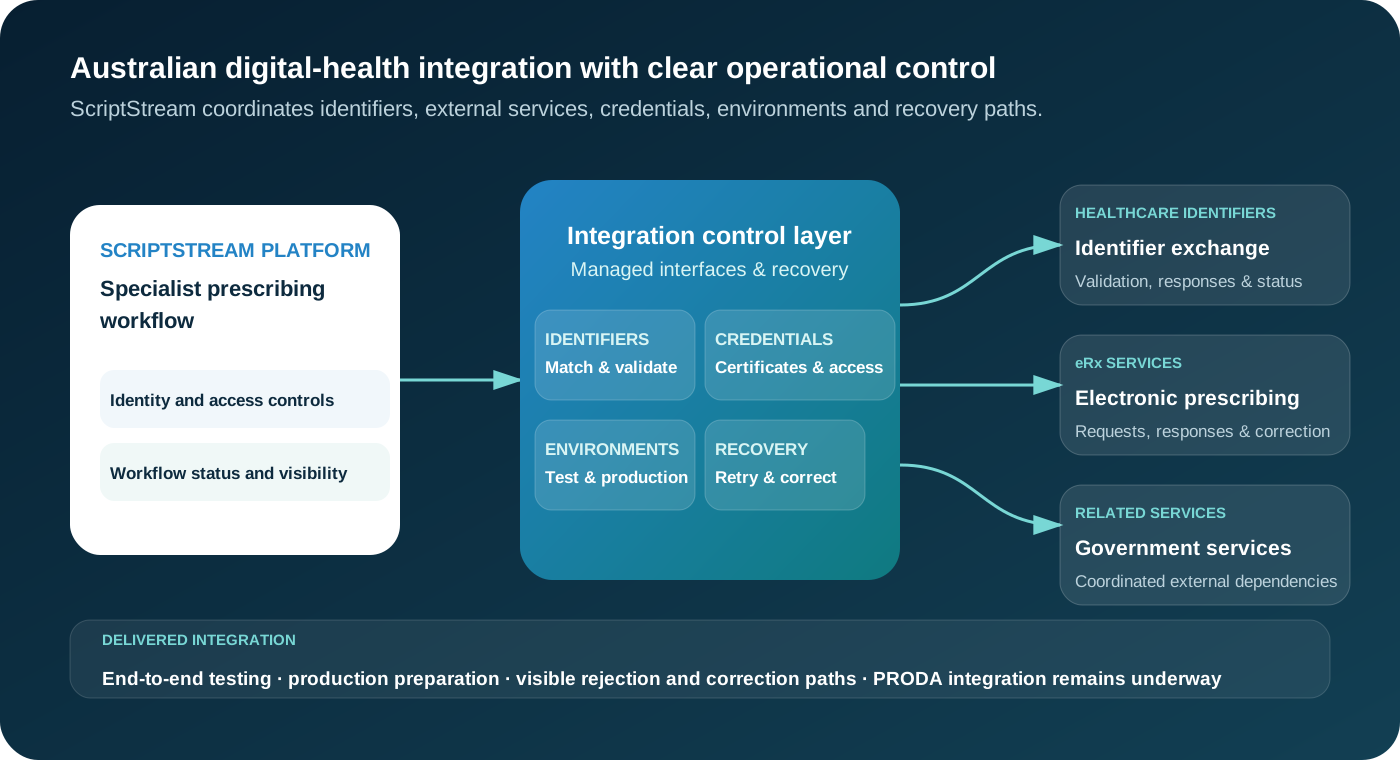
Australian integration work in practice
Twin Global Solutions completed integration and production-readiness work covering Healthcare Identifiers integration, eRx interfaces, certificates, credentials, test and production environments, rejection handling, retries, correction paths, status visibility and end-to-end testing.
The wider programme also includes PRODA-related access work, with full PRODA integration still underway. The customer story contains the complete milestone record and current production status.
View the ScriptStream customer storyMap systems, ownership and failure risk
The discussion should cover the systems, dependencies, migration constraints and failure scenarios that matter.